Behind the Term Sheet: Theker Robotics’ $85M Series A
Stories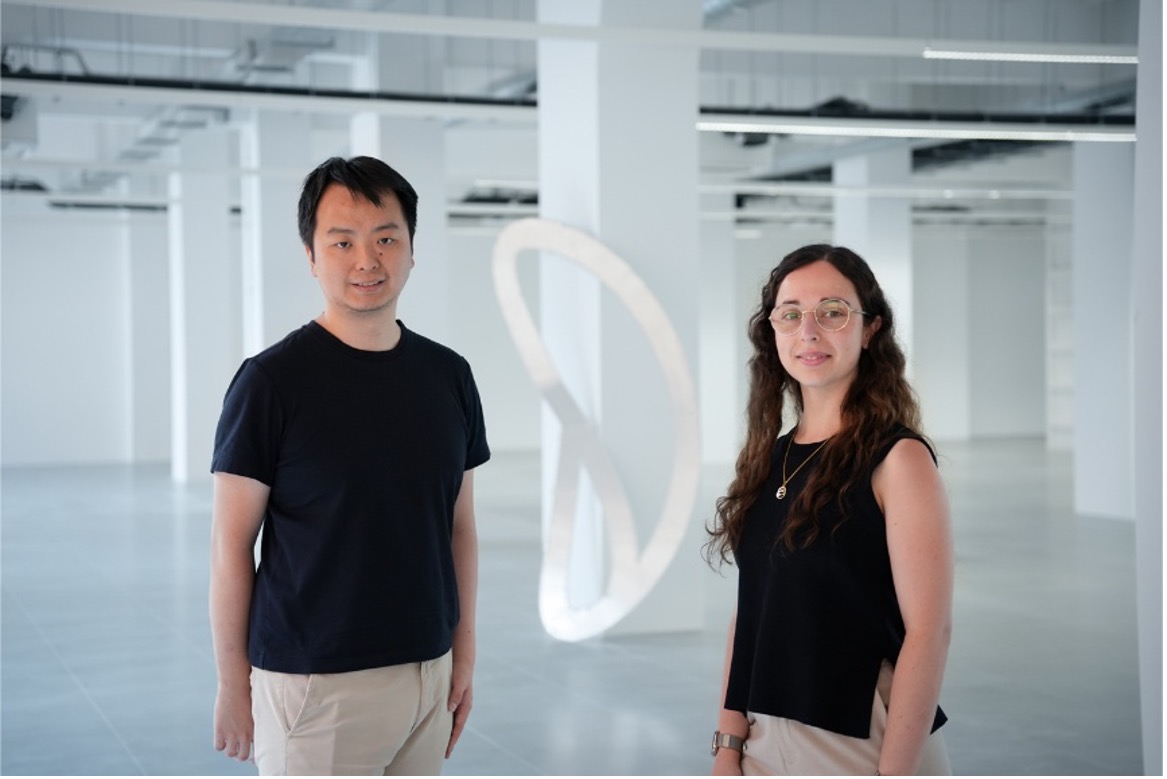
How this Barcelona-born physical AI company is taking on the biggest unsolved problem in industrial automation
By: Katharina Schild & Jacky Abitbol
Read on Medium
Traditional robots are very good at doing the same thing over and over again. The problem is that most factories and warehouses do not work that way.
Products change shape, size, weight and position. Garments crumple. Packages bend or overlap. A human worker adjusts without thinking, while a traditional robot often needs a controlled environment, fixed programming and a narrowly defined task.
This is the gap Theker Robotics is built to close.
The Barcelona-based company recently announced its $85 million Series A — the largest ever raised by a robotics company in Europe. The round was led by CRV with us at Cathay Innovation investing alongside Samsung, Aglaé (LVMH), Henkel Ventures, Bright Pixel Capital (Sonae), 20VC and Korelya as well as existing investors including Inditex, Kfund, Kibo Ventures, Itnig and Mission.
We believe that Theker is positioned to solve for one of the largest remaining challenges in industrial automation: making robots useful when the task, object or environment changes. Here’s what got us invested.
The Market: When Physical AI Meets Industrial Reality.
The next wave of AI value creation will come from integrated industrial systems that operate in the real world and prove customer ROI fast. The moats being built today live in proprietary data pipelines, domain expertise, deployment infrastructure and customer relationships that generate real-world feedback loops continuously scaling data collection and improving the system.
This distinction matters enormously. The gap between an impressive robotics demo and a robot generating ROI in a live production facility is vast. Deploying a robot that handles crumpled garments, mixed parcels and soft packaging at operational speed, working alongside humans, across different warehouse layouts and safety requirements, is a fundamentally different engineering challenge. In robotics, the core question is not just how to build. It’s how to scale and critically, how to deploy into live operational processes at scale. That is where the field is hardest and where the most durable competitive advantages are being established right now.
Several forces are coming together to make this the defining moment for industrial physical AI. The labor shortage is structural, not cyclical: High turnover, rotation costs, absenteeism and increasing regulatory pressure make human-dependent operations economically fragile in ways that are not going to reverse. The addressable opportunity is also significantly larger than traditional automation: the vast majority of high-variability manipulation tasks involving soft goods, mixed SKUs and deformable objects have never been automatable at all. This is an untapped market, not a replacement market.
The timing is not coincidental. The convergence of rising labor costs, structural talent gaps and exceptional advances in AI manipulation has opened a window that is creating acute, pull-driven demand across logistics, retail and beyond.
Enter Theker.
Founded in 2021 in Barcelona, Theker Robotics is building a full-stack, multi-vertical manipulation robotics platform combining proprietary AI software, electronics, grippers and in-house manufacturing deployed directly to end-customers under a Robot-as-a-Service model. Their mission is ambitious in the most grounded way imaginable: solve 100% of physical work.
Built for production.
Theker does not approach customers through long innovation programs or experimental pilots. The team works directly with operations and logistics leaders, focusing on workflows where the problem is immediate and the value of automation can be clearly measured.
The company’s systems are already operating in live industrial environments. Theker can move from identifying a use case to deployment in days or weeks, rather than the long installation cycles typically associated with industrial robotics.
Its Robot-as-a-Service model also means that the company remains responsible for performance after installation. The goal is not simply to sell a robot, but to ensure that it works reliably and creates measurable value over time.
This creates a direct feedback loop between the factory floor and the engineering team. Every deployment exposes the system to new objects, configurations and edge cases, generating data that improves the platform and helps Theker address new workflows faster.
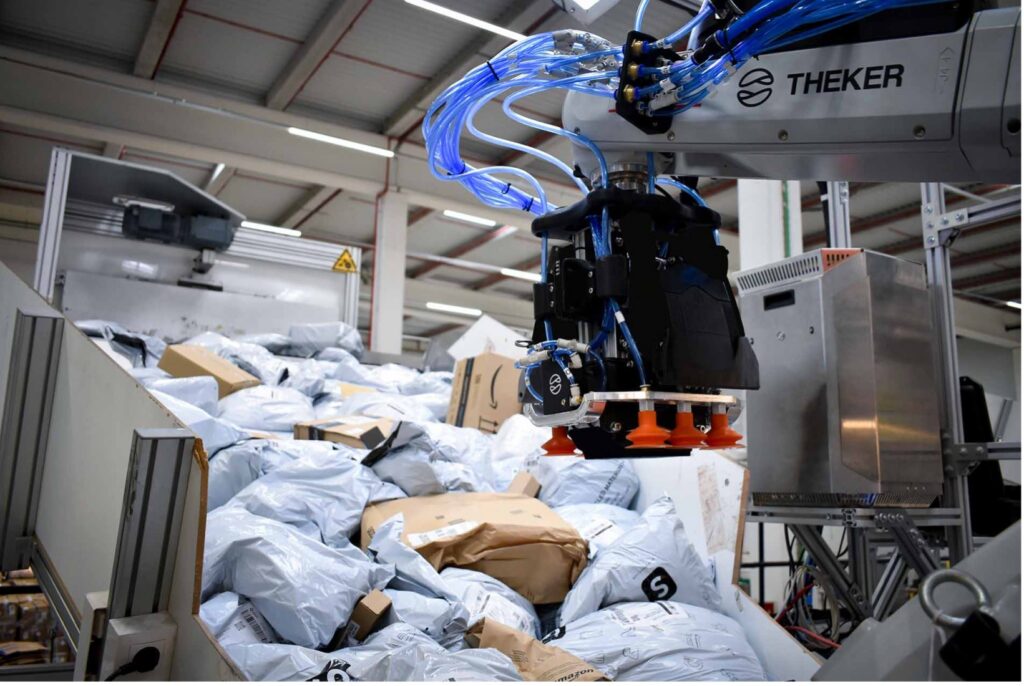
A full stack built to learn.
Handling an irregular object requires several systems to work together. The robot must identify the object, understand how it can be grasped, plan the movement and execute it with the right hardware.
By owning the software, electronics, grippers and manufacturing, Theker can identify precisely where a problem occurs and improve the relevant part of the system. Hardware and software evolve together rather than being developed as separate products.
As the company deploys more systems, that advantage compounds. More robots create more real-world data, which improves performance, expands the range of use cases and makes future deployments faster.
Founders built for the challenge.
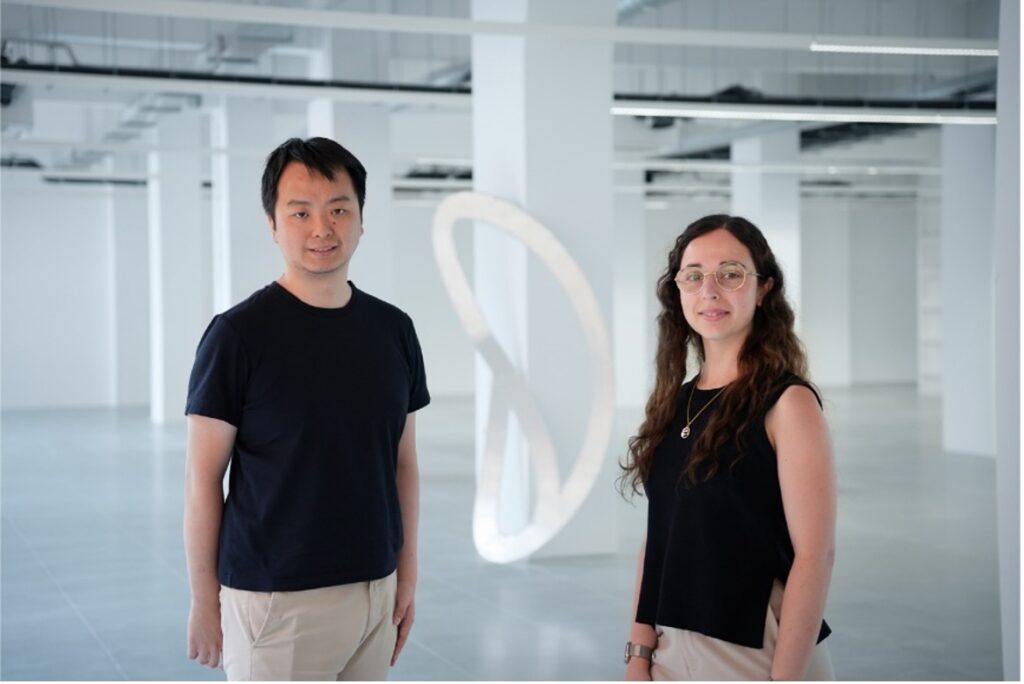
Since our first meeting with Theker founders Carla Gómez Cano and Jiaqiang Ye Zhu, we have been deeply impressed by their exceptional ambition and visionary obsession to build a category-defining, global winner in robotics.
The co-founders met at UPC Barcelona competing in robotics, co-founded the university’s robotics association and after graduating decided to turn their lifelong passion into Theker, driven by a shared technical obsession years in the making. Ambitious, high-intensity and product-obsessed, they build in direct contact with customer operations and iterate extremely fast, creating around them a culture where the best people self-select in.
Our Conviction.
At Cathay Innovation, we invest at the intersection of software, AI, and the physical world. Our portfolio reflects a long-standing conviction that the most durable technology businesses of the next decade will be those that bring AI into real-world systems — in healthcare (Owkin, Bioptimus, Nabla), in industry (Entalpic, Descartes), but also in robotics (Galaxea) and AI (AMI Labs).
Theker sits squarely at the center of that thesis, combining real-world production deployments at scale, a generalist architecture that adapts across industries without custom engineering, and a proprietary hardware stack that generates a data moat compounding with every deployment.
The alignment between Theker’s deployment ambitions and our corporate ecosystem — a network of strategic industry partners who are also investors in our funds — is one of the factors that makes this collaboration particularly exciting.
In physical AI, the window for establishing a commanding position is open but it will not stay that way indefinitely. The companies that own the deployment data, the customer relationship, and the proprietary hardware stack will be structurally difficult to displace at scale. And that’s exactly what Carla, Jiaqiang, and the Theker team are building at an incredible pace and discipline.
We could not be more excited to be part of the journey.
NEWS